Centers of Excellence
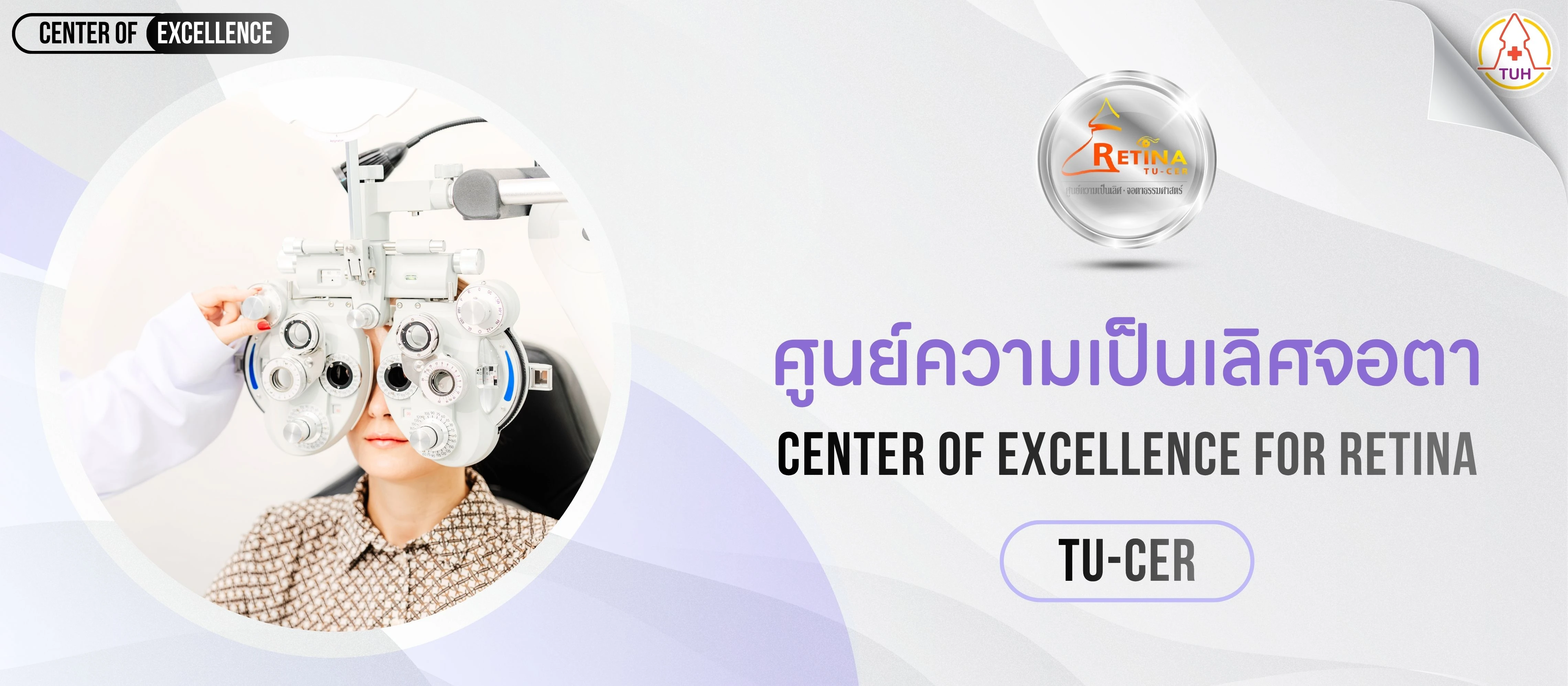
Center of Excellence for Retina
Regional specialized referral hub for complex retinal diseases, accredited with Disease-Specific Certification (PDSC) for Rhegmatogenous Retinal Detachment (RRD), achieving surgical success rates of 91.09%–98.96% (surpassing AAO international standards).
Subtitle & Introduction
Globally, visual impairment represents a major public health crisis that severely impacts quality of life and economic productivity. Data from the World Health Organization (WHO) highlights the urgent need to develop highly efficient eye care systems.
"According to the World Health Organization (WHO), at least 2.2 billion people worldwide suffer from visual impairment, many of which are preventable conditions if diagnosed and treated appropriately in a timely manner."
Particularly, Rhegmatogenous Retinal Detachment (RRD) is the most common ophthalmic emergency, with a global incidence of approximately 12 cases per 100,000 population annually. Without timely treatment, it leads to permanent vision loss.
Strategic Importance Analysis: Thammasat Center of Excellence for Retina (TU-CER) is not merely a specialized clinic, but a systemic intervention designed to alleviate the national burden of preventable blindness. TU-CER bridges the gap in managing preventable visual loss by integrating high-volume patient care capacity with high-precision emergency response protocols, ensuring every patient receives standardized clinical pathway care within the optimal therapeutic window.
Vision, Mission & Strategic Pillars
The vision and mission of TU-CER serve as a guiding compass focused on patient safety and evidence-based clinical excellence. We have translated our organizational identity into concrete strategic pillars as follows:
Vision: To become a modern and leading Center of Excellence for Retina (TU-CER) delivering top-tier international standards of care.
Modernity: Integrating new evidence and advanced technology into standardized Clinical Pathways to eliminate variation and maximize clinical precision.
Leading: Standing firm as a primary Referral Hub for complex retinal cases across the region.
Missions:
Clinical Excellence: Delivering holistic, high-quality care for complex retinal detachment patients.
Research & Training: Advancing clinical research and training specialized personnel to ensure healthcare system sustainability.
Accreditation & Quality Pathways (PDSC)
PDSC Certification: Accredited with Program Discovery and Certification (PDSC) for Rhegmatogenous Retinal Detachment (RRD) continuously across the cycles of 2021–2024 and 2024–2027.
Operational Targets and Quality Practice Comparison Table
Operational Target | Evidence-Based Practice (TU-CER) |
|---|---|
Timely & Accurate Diagnosis | Fast-Track Retina Clinic triage with standardized Triage Checklists. |
Surgical Quality & Expertise | Optimal selection of surgical techniques and intraocular tamponade agents by retina specialists. |
Standard Nursing Care & Safety | Strict Infection Control (IC/SOP) compliance and precise Macula-on/off assessment. |
Patient Engagement & Adherence | Implementation of the D-Method by Nurse Case Managers (NCM) and video-assisted face-down positioning training. |
Strict adherence to Program Discovery and Certification (PDSC) standards directly contributes to reducing post-operative infection rates and minimizing potential complications, leading to statistically tangible clinical outcomes.
Hero Statistics & Key Performance Indicators
The success of TU-CER is measured not merely by patient volume, but by high-quality outcomes that surpass international benchmarking standards
Retinal Reattachment Success Rate:
International Benchmark (AAO 2020): American Academy of Ophthalmology sets standard success rates at 87.50% – 90.00%.
TU-CER Actual Performance: Achieves a surgical success rate of 91.09% to 98.96%, significantly surpassing international benchmarks.
Key Success Factors:
D-Method by NCM: Dedicated engagement system improving patient compliance with post-operative instructions (e.g., face-down positioning).
Case Conference System: Regular reviews of complex cases for tailored surgical strategies.
Clinical Pathway Integration: Unified care process from initial triage to post-op recovery.
Research & Clinical Innovations
Research Elevating Standards of Care:
(2021) "The Pain relief Effect of Cold Normal Saline Eye Irrigation before Intravitreal Injections" — Pioneered cold saline eye irrigation to reduce pain prior to intravitreal injections.
(2023) "Risk Factors of Redetachment after Treatment of Rhegmatogenous Retinal Detachment" — Identified critical risk factors to minimize surgical failure.
(2023) "A Study on the Etiology of Spontaneous Vitreous Hemorrhage in Thammasat University Hospital" — Enhanced diagnostic precision for spontaneous eye bleeding.
Location & Contact Information
Location: Retina Center, 2nd Floor, M.R.W. Suwaphan Sanitwong Building, Thammasat University Hospital.
Phone: 02-926-9936-9.