
About Us
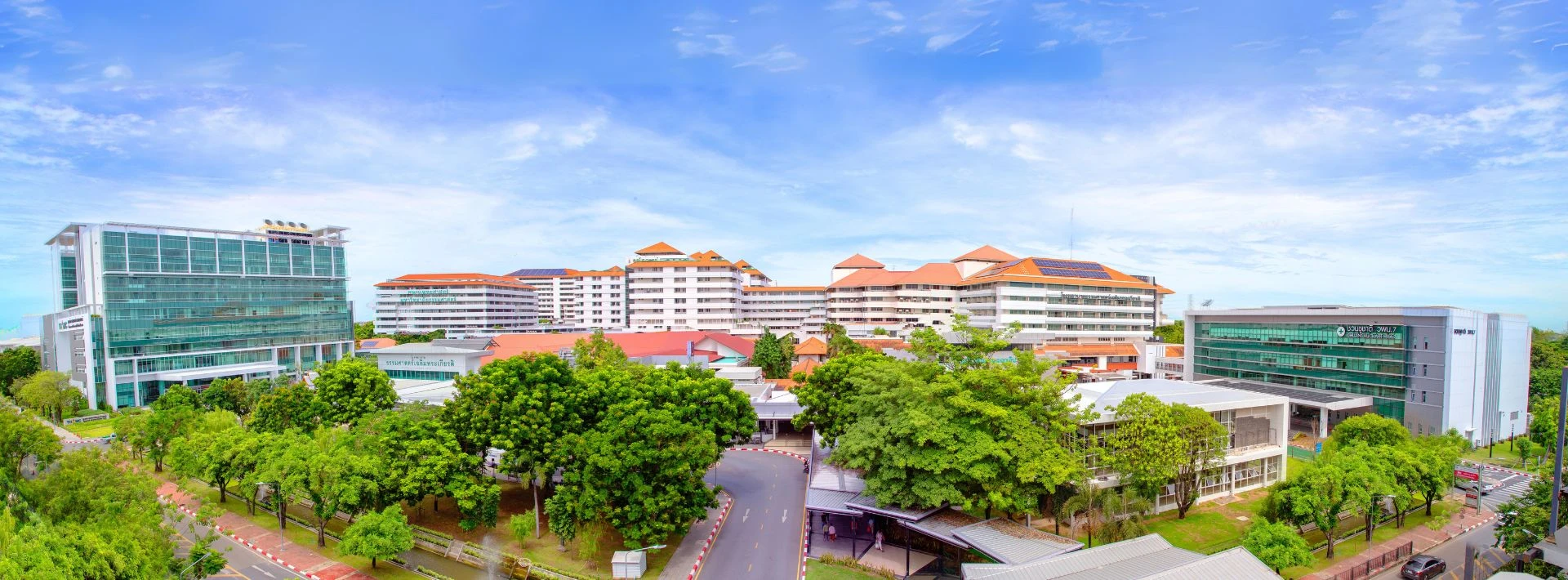
Thammasat University Hospital — committed to becoming a world-class, modern, and caring hospital
Hospital History
The 1st Decade
(1988–1997) : Establishment of the Hospital as a Secondary Care Hospital
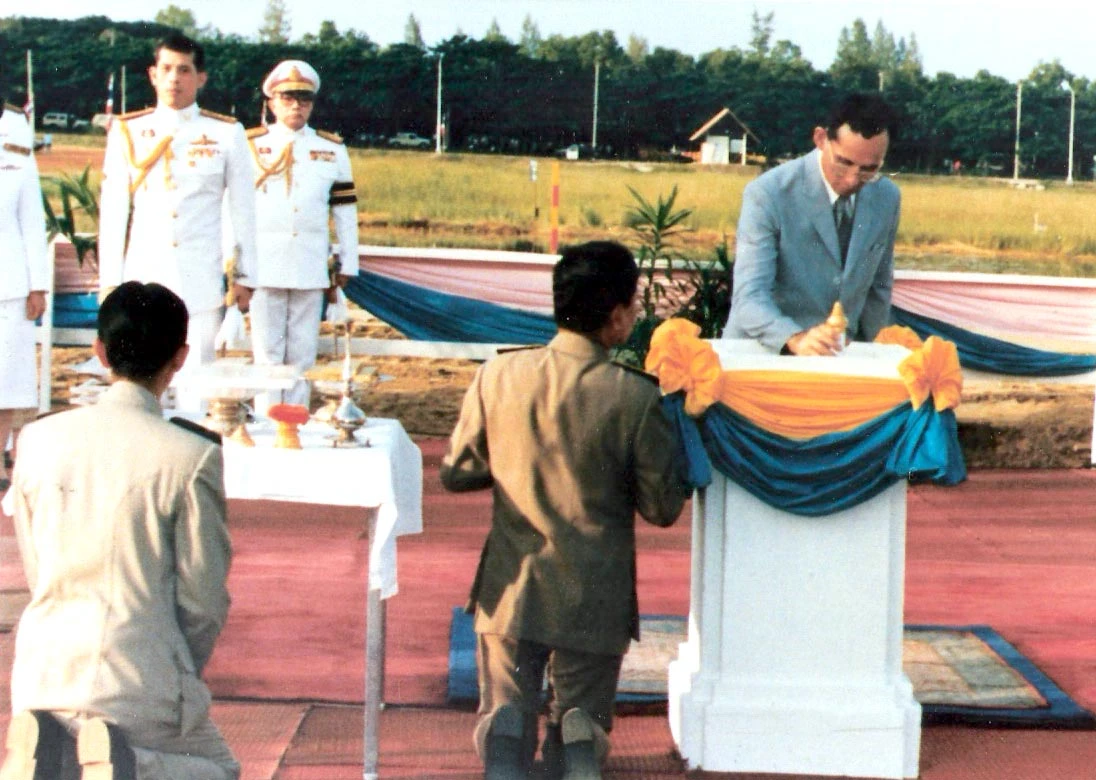
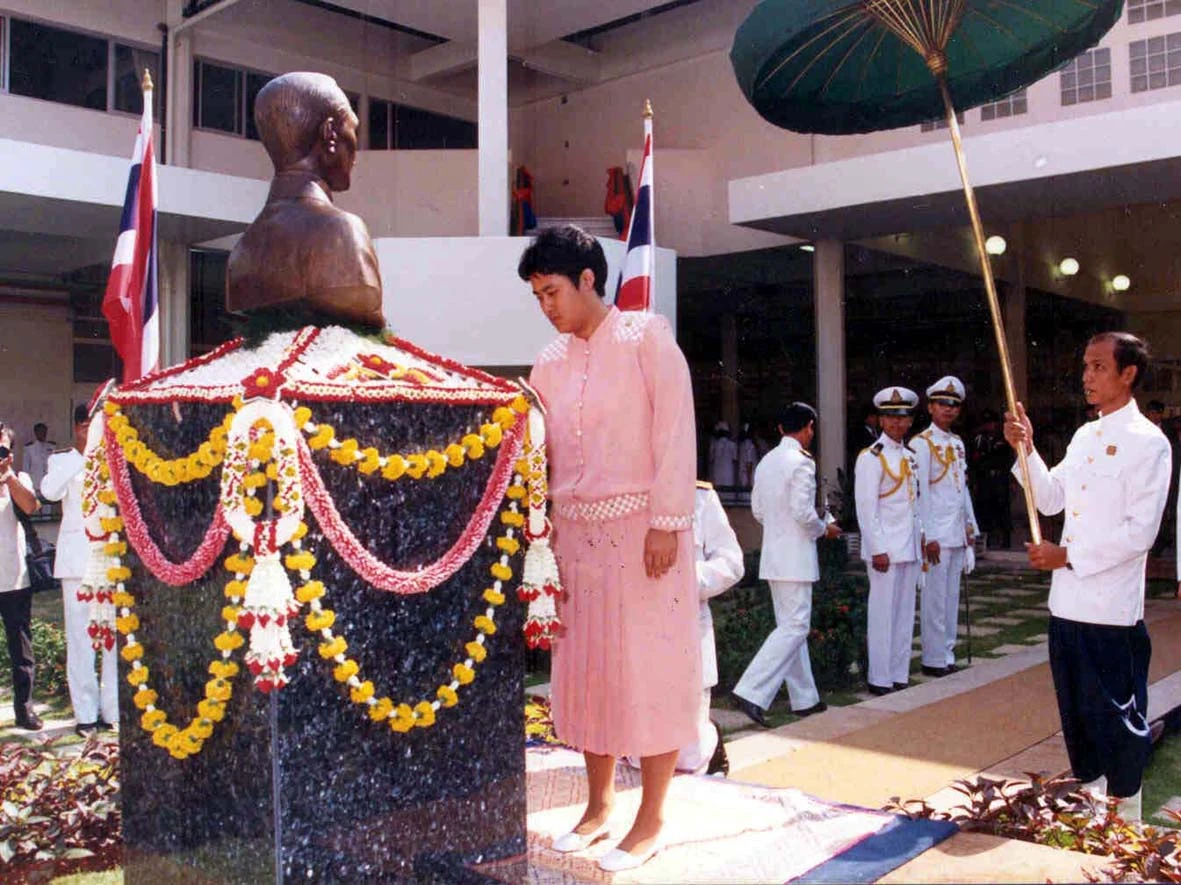
The establishment of Thammasat University Hospital was graciously supported by His Majesty King Bhumibol Adulyadej The Great (King Rama IX), who graciously bestowed upon the hospital the name “Thammasat University Hospital.”
Construction of the hospital began during the tenure of Professor Khunying Nongyao Chaiseri, President of Thammasat University. The establishment of the hospital was made possible through the generous support and contributions of the heirs of M.R. Suvaphan Sanitwong, Thai Military Bank Limited, the Foundation for Thammasat University Hospital, Thammasat University alumni, the Thammasat community, and members of the public.
“This hospital shall serve as a place of refuge for the sick. It is not intended solely for the Thammasat community, residents of nearby areas, or industrial workers; it will certainly also provide medical services to people from distant areas.”
Thammasat University Hospital subsequently opened its doors to the general public for the first time on December 5, 1987, as an act of merit in honor of the auspicious occasion of His Majesty King Bhumibol Adulyadej The Great’s 60th Birthday and Anniversary.
On March 29, 1988, Her Royal Highness Princess Maha Chakri Sirindhorn, The Princess Royal, graciously represented His Majesty the King in presiding over the official opening ceremony of Thammasat University Hospital.
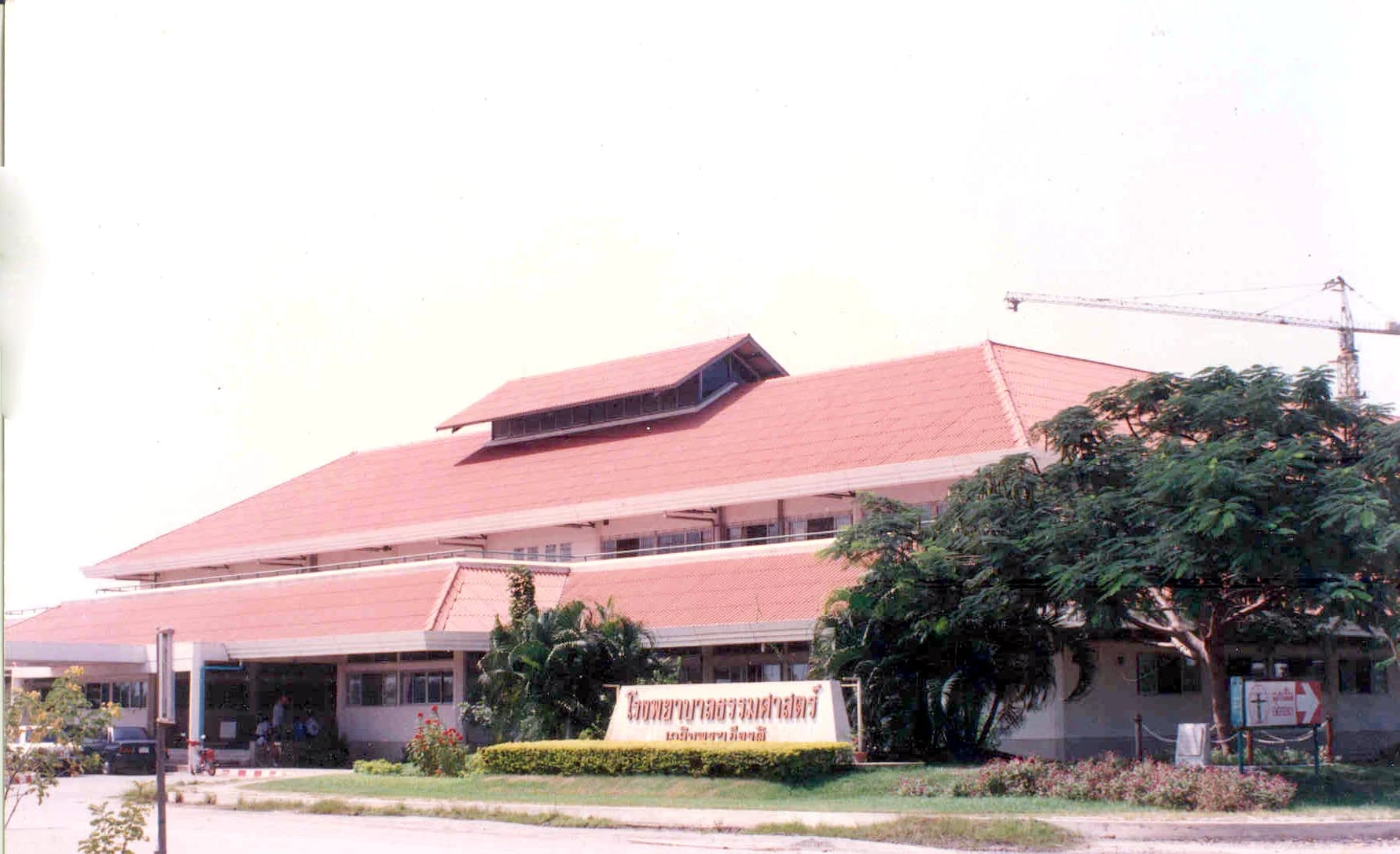
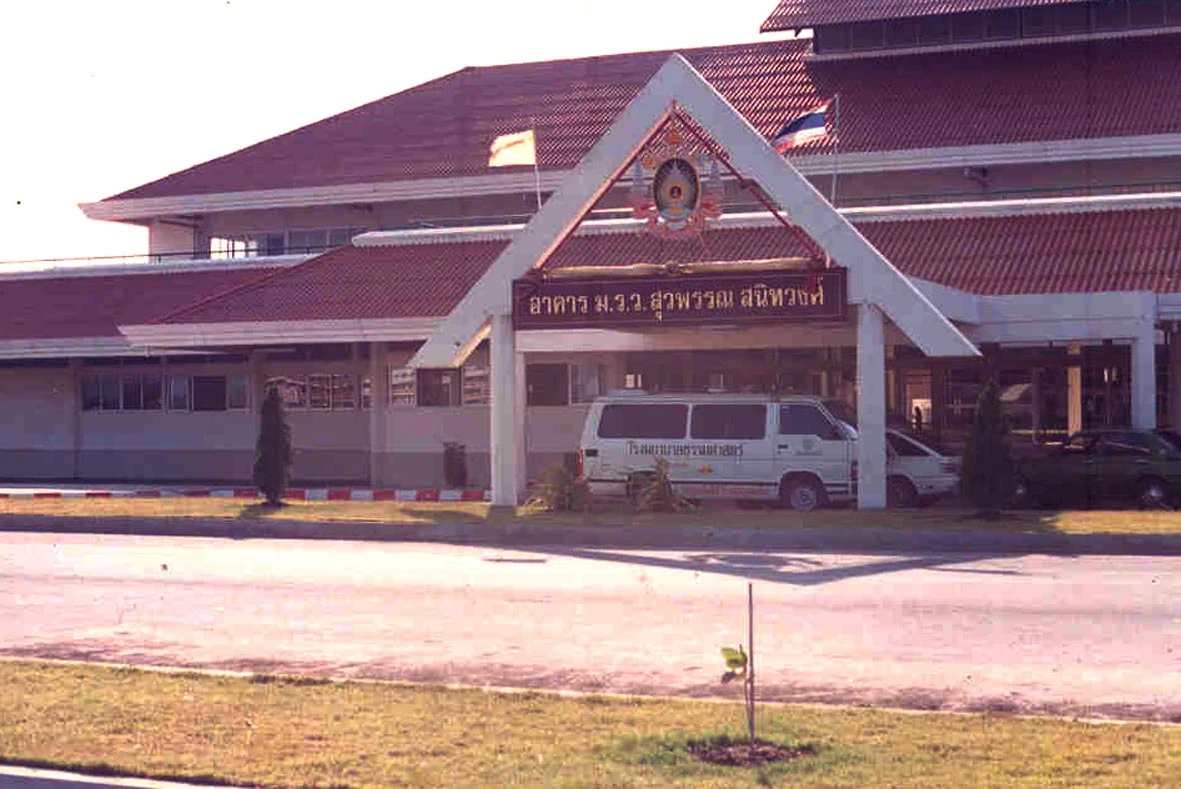
During its initial phase, the hospital provided medical services to the general public through two buildings. The M.R. Suvaphan Sanitwong Building housed emergency and outpatient services, as well as various administrative offices, while the Thai Military Bank Building provided inpatient services for all categories of patients.
The hospital provided medical services to students and staff of Thammasat University, Rangsit Campus, while also expanding its services to the general public. In its early years, the hospital operated as a secondary care hospital, with specialists in the major medical disciplines, a capacity of 100 inpatient beds, and approximately 60,000 outpatient visits per year.
The 2nd Decade
1998–2007 | Development into a Tertiary-Care Teaching Hospital
The hospital began further developing its operations under the administration of the Faculty of Medicine, Thammasat University.
It developed into a tertiary-care teaching hospital, providing more comprehensive medical care with faculty physicians covering all major medical specialties.
The hospital began developing specialized medical centers.
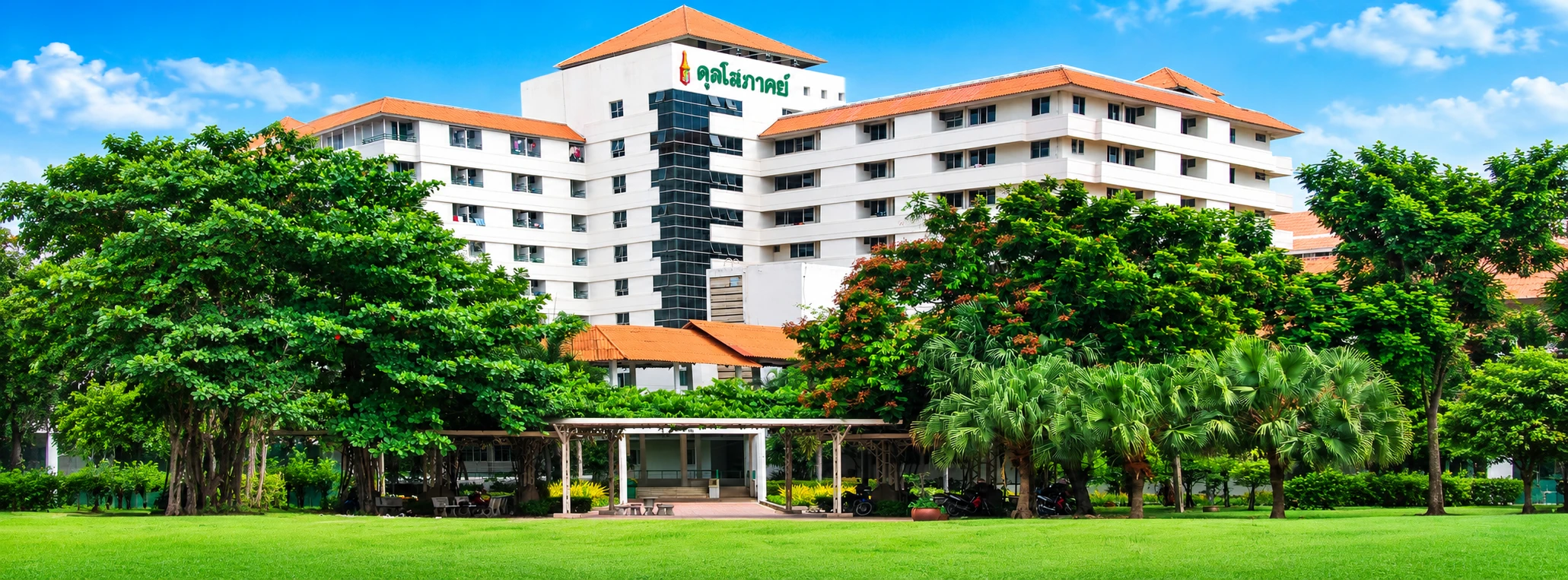
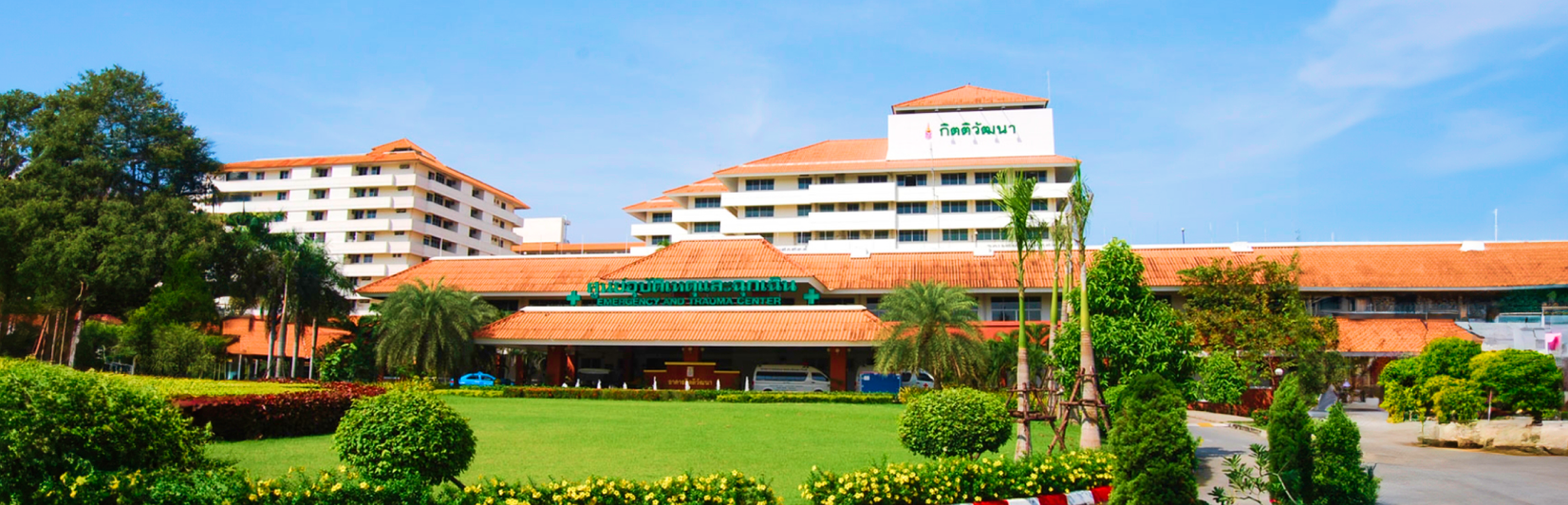
The Kittiwattana Building and Dulsophak Building were officially transferred to the hospital.
The 3rd Decade
2008–2017 | Development toward Specialized Medical Services, Centers of Excellence, and Research
The hospital received the Kittiwattana Building, Phase 2, for development into specialized medical centers, and constructed the Kittiwattana Building, Phase 3, to expand inpatient wards. During this period, the hospital also advanced the development of Medical Centers of Excellence (Excellence Centers) and clinical research.
The hospital received accreditation in accordance with the Healthcare Accreditation (HA) standards
The 4th Decade
2018–Present | Advancing toward an Advanced Tertiary-Care Hospital, Digital Hospital, and Hospital Management
During its fourth decade, Thammasat University Hospital has continued to enhance its operations toward becoming an advanced tertiary-care hospital, while steadily advancing its transformation into a Digital Hospital.
In 2023, Thammasat University Hospital has received Advanced Healthcare Accreditation (Advanced HA) from the Healthcare Accreditation Institute (Public Organization) for a three-year period, from April 21, 2023, to April 20, 2026.
In 2026, the hospital once again received renewal of its Advanced Healthcare Accreditation (Advanced HA), reflecting its ongoing commitment to continuously improving the quality of healthcare services and patient safety.
In addition, the hospital has expanded its physical infrastructure by more than 100,000 square meters to accommodate the growing demand for medical services, academic development, and more efficient patient care. Major building and infrastructure projects include :
Chuanchuchart TEA.7 Building – Located in front of the Kittiwattana Building (Accident and Emergency).
Thammasat Advanced Medical Center (THAMC) – A premium specialized medical center operated under Thammasat University Hospital.
TUH Parking & Plaza – A parking facility with a capacity of approximately 1,000–1,500 vehicles.
Thammasat University 88th Anniversary Building – An inpatient facility providing services in Pediatrics, Mental Health, Ophthalmology, Otolaryngology (ENT), and Rehabilitation Medicine.
Thammasat Thammarak Center Building – Dedicated to geriatric medicine and palliative care services.
Geriatric Medicine Building (Thammasat Thammarak Center) – A geriatric medical center dedicated to the comprehensive care of older adults.
Thammasat University Hospital Food Center (OR SPACE) – A food center serving patients, hospital staff, and patients’ families and visitors.
Cancer Innovation and Radiation Therapy Center Building (Thammasat University 90th Anniversary Building) – A patient care facility housing the Cancer Center, Heart Center, and Organ Transplantation Center.
Nongyao Chaiseri Building – Formerly the Thai Military Bank Building, this facility is dedicated to preventive healthcare (Preventive Care).