Centers of Excellence
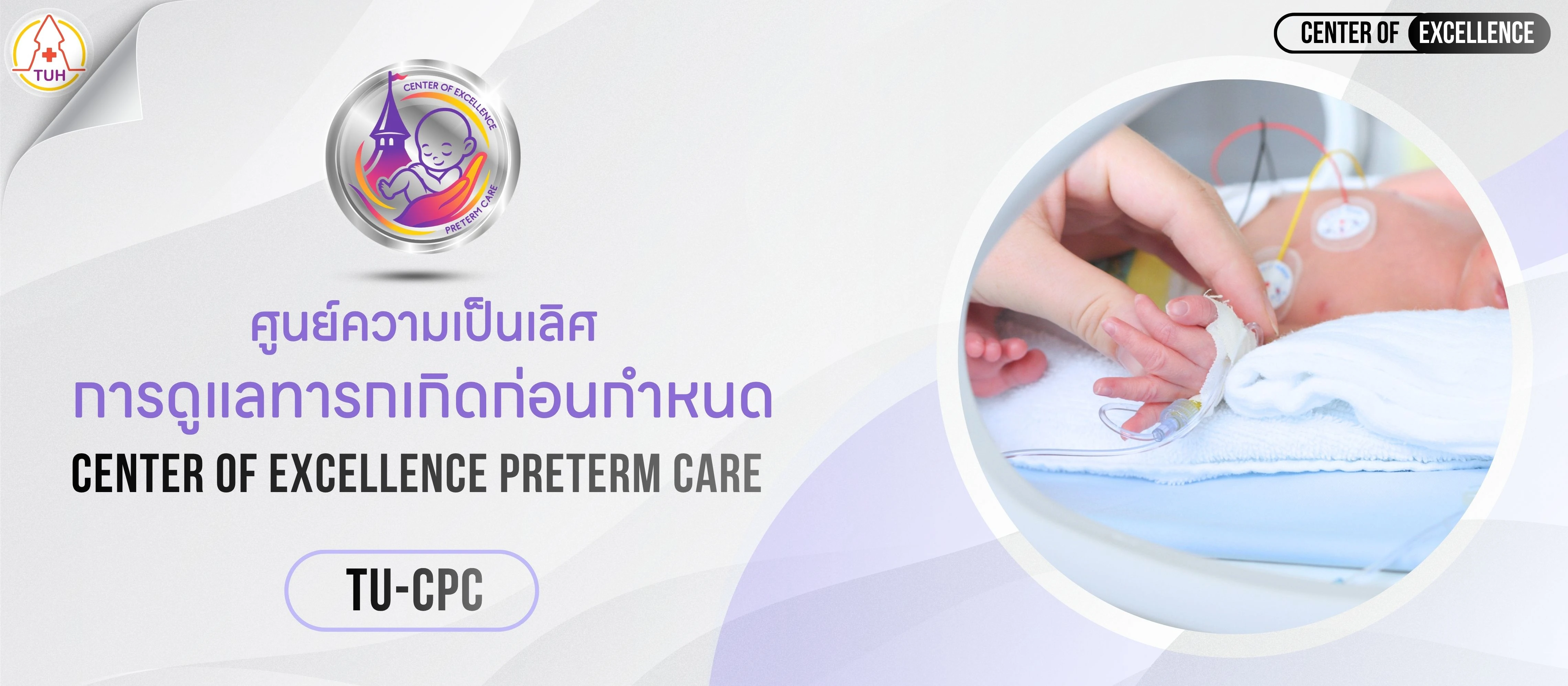
Center of Excellence for Preterm Care
Advanced tertiary center for premature infants, achieving a 97.14% survival rate through a multidisciplinary team, strict clinical timelines, and Family-Centered Care (FCC) .
Subtitle & Strategic Context
According to the World Health Organization (WHO), complications from preterm birth are the leading cause of death in children under 5 years old, accounting for nearly 900,000 deaths annually. In Thailand, Thammasat University Hospital, as an advanced tertiary medical institution, faces a preterm birth rate of 10%–12% (11.2% in 2022, 10.77% in 2023, and 10.26% in 2024).
Analysis of Challenges: Caring for premature infants is not merely maintaining vital signs, but managing the complexity of underdeveloped nervous systems and organs, which contributes to high treatment costs and risks of long-term disability.
Proactive Strategy: The Center of Excellence for Preterm Infant Care was established to shift the paradigm from "standard care" to "extra-safe excellence." Rather than merely treating disease, we manage high-risk regional populations using a multidisciplinary team structure as the core mechanism driving superior clinical outcomes.
Multidisciplinary Team Structure & Operational Integration
Governance: Operates under the Hospital Executive Board, linking directly to the Clinical Leading Team (CLT) and the Neonatal Patient Care Team (PCT).
Expert Hierarchy: Led by Neonatologists and Perinatologists, working alongside Pediatric Surgeons, Cardiothoracic Surgeons, Ophthalmologists (Retina Experts), Radiologists, and Subspecialist Pediatricians (Infectious Diseases, Cardiology, Nephrology, Genetics).
Multidisciplinary Support: Clinical Pharmacists, Clinical Nutritionists, Physical Therapists, Medical Social Workers, and Specialized Neonatal Nurses.
กลยุทธ์การดำเนินงาน (Operational Flow): Interprofessional ID Rounds and Family Meetings eliminate operational silos to deliver synchronized, high-precision care during critical windows.
Critical Timelines & Safety Standards
Speed and precision are the "Determinants of Survival" in premature infants. The Center has established strict time-sensitive Clinical Protocols (Critical Timelines) as follows:
Table: High-Level Safety Measures and Critical Timelines
Procedure / Screening | Target Timeline | Strategic Safety Purpose |
|---|---|---|
Surfactant Administration (Severe RDS) | Within 2 hours of birth | Prevents lung collapse and respiratory failure |
ROP Eye Screening (Retinopathy) | Day 28 or PMA 31 weeks | Early detection to prevent permanent blindness |
Brain Ultrasound (IVH Screening) | Within the first 7 days | Screens for Intraventricular Hemorrhage (IVH) |
High-Risk Delivery Support | 24/7 Coverage | NICU Shift Leader attends all high-risk deliveries |
Staff Competency | 100% Mandatory | All staff must be certified in Neonatal Resuscitation (NCPR) |
Diagnostic Excellence: We utilize Retcam technology for diagnostic verification and a specialized Mini eye drop innovation to reduce systemic side-effects from pupil dilation. Strictly adhering to these timelines serves as the primary defense against severe complications, such as Grade 3+ IVH and visual disability.
Performance Metrics & Outcomes Analysis
Statistical data from 2019 to 2025 reflects the Center's capability in elevating quality of life and optimizing resource management.
บทวิเคราะห์สถิติสำคัญ (2562-2568)
ตัวชี้วัดสำคัญ | 2562 (Base) | 2568 (Oct 67-Sep 68) | Strategic Insight |
|---|---|---|---|
Survival Rate (%) | 90.4% | 97.14% | Elevated to international standards for high-risk neonates |
Average Length of Stay (วัน) | 35.3 | 17.56 | 50% efficiency increase driven by the MDT system |
ต้นทุน ELBW (บาท/คน) | N/A | 698,436 | High-Intensity Care focusing on long-term outcomes |
ต้นทุน VLBW (บาท/คน) | N/A | 303,512 | Cost-effectiveness achieved through reduced length of stay and complications |
7 Dimensions of Quality:
Accessibility: 100% of critical neonates and in-utero transfers received care in NICU/High-Risk units.
Acceptability: High family satisfaction rates achieved through active family engagement.
Appropriateness: Strict compliance with Clinical Timelines (ROP, Ultrasound, Surfactant).
Efficiency: Significant reduction in average length of stay, reflecting care process efficiency.
Effectiveness: High survival rates and optimal infant growth (>P10 percentile) upon discharge.
Continuity: Continuous follow-up system up to 2 years of age by Nurse Case Manager (NCM).
Safety: VAP infection rates and Level E medication errors reduced to 0.
มาตรฐานความปลอดภัยและการบริหารความเสี่ยง
กระบวนการ (Care Process) | ความเสี่ยงสำคัญ | มาตรการป้องกันเชิงยุทธศาสตร์ |
|---|---|---|
1. ระยะแรกรับและการประเมิน (เข้าถึงไว วินิจฉัยแม่นยำ) | เตียงเต็ม/รับผู้ป่วยวิกฤตไม่ได้ | บริหารจัดการเตียงและอัตรากำลังคนอย่างยืดหยุ่น เตรียมพร้อมทีมแพทย์-พยาบาลที่เชี่ยวชาญการกู้ชีพ (NCPR) 24 ชั่วโมง ใช้คู่มือมาตรฐาน (Protocol) ร่วมกับการปรึกษาข้ามแผนกเพื่อให้วินิจฉัยได้เร็วที่สุด รวมถึงการวางแผนตั้งแต่เนิ่นๆ เพื่อลดอัตราการกลับมานอนโรงพยาบาลซ้ำ |
2. ระยะดูแลรักษา (ลดภาวะแทรกซ้อนและความผิดพลาด) | ป้องกันตาบอดจาก ROP | คุมระดับออกซิเจนให้อยู่ในเกณฑ์ นำเทคโนโลยีมาช่วยคัดกรอง (เช่น กล้อง Retcam, นวัตกรรมยาขยายม่านตา) และมีแผนการส่งต่อเพื่อรักษาอย่างทันท่วงที |
ป้องกันการติดเชื้อ (ปอดอักเสบและเชื้อดื้อยา) | ใช้ระบบคัดกรองและแยกห้อง ใช้เครื่องมือแบบใช้ครั้งเดียวทิ้ง ควบคุมอุณหภูมิห้อง และคุมเข้มเรื่องการล้างมือควบคู่กับการใช้ยาปฏิชีวนะอย่างสมเหตุสมผล | |
ความปลอดภัยของอุปกรณ์และยา | ป้องกันท่อช่วยหายใจหลุดด้วยนวัตกรรมยึดเกาะและการประเมินทุกชั่วโมง ป้องกันการให้ยาผิดพลาดด้วยระบบสั่งยาผ่าน Web Application และดูแลผิวหนังที่บอบบางของทารกเพื่อลดแผลกดทับ | |
3. ระยะเตรียมความพร้อมและกลับบ้าน (สื่อสารดี ดูแลต่อเนื่อง) | ข้อร้องเรียนจากการที่ญาติได้ข้อมูลไม่ครบถ้วน และการหลุดนัดหลังออกจากโรงพยาบาล | เปลี่ยนรูปแบบการพยาบาลให้มี "พยาบาลเจ้าของไข้" จัดประชุมครอบครัว (Family meeting) เพื่ออธิบายแผนการรักษาและลดความเข้าใจผิด ส่งเสริมให้แม่ให้นมบุตรอย่างถูกวิธี จัดทำสื่อความรู้ออนไลน์ที่เข้าถึงง่ายผ่านมือถือ และมีพยาบาลคอยติดตามอาการหลังกลับบ้านอย่างใกล้ชิด |
Family-Centered Care Integration
เราเปลี่ยนปรัชญาจาก "Patient-Centered" สู่ "Family as Part of the Team" เพราะครอบครัวคือหัวใจสำคัญของผลลัพธ์ระยะยาว
กลยุทธ์การเสริมสร้างศักยภาพ (Empowerment Strategies):
Integrative Support: ส่งเสริมการเลี้ยงลูกด้วยนมแม่ผ่าน Skin-to-skin contact, Colostrum และ Oral Stimulation เพื่อกระตุ้นพัฒนาการ
Information Governance: จัดทำ Family Meeting เพื่อให้บิดามารดามีส่วนร่วมในการตัดสินใจ และใช้ Smart Phone เพื่อการเข้าถึงข้อมูลที่แม่นยำ
Parent Support Group: สร้างชุมชนแห่งการเรียนรู้เพื่อเสริมสร้างพลังใจระหว่างครอบครัว
ความต่อเนื่องที่ไร้รอยต่อ (Continuity of Care): ระบบ Discharge Planning เริ่มต้นตั้งแต่วันแรกที่รับเข้าดูแล โดยมีจุดเน้นที่ Rooming-in เพื่อเตรียมความพร้อม และติดตามผลผ่าน Newborn Clinic โดย NCM จนถึงอายุ 2 ปี เพื่อลดอัตรา Re-admission และสร้างความมั่นใจในการดูแลที่บ้าน
Innovation & Continuous Quality Improvement - CQI
CQI Success Stories:
The Hypothermia Journey: Reduced hypothermia incidence from 50.4% down to 18% through multi-stage thermal innovations, winning an international Silver Medal.
Respiratory Safety: The "Safety in Every Breath" project reduced accidental extubation using N-PASS scoring tools and positioning innovations.
Medication Excellence: Implemented Small Dose Management and One Page Guidelines, reducing high-risk medication errors to 0.
Future Goals: The Center plans to introduce in-house Laser ROP surgery by specialized ophthalmologists to establish a comprehensive One-Stop Service. Beyond preserving neonatal lives
we are dedicated to fostering complete neurodevelopmental quality of life, demonstrating advancements in neonatology and standing as a proud role model for Thammasat University Hospital.
Location & Contact Information
Location: Neonatal Intensive Care Unit (NICU), 2nd Floor, Kittiwattana Building, Thammasat University Hospital.
Phone: 0 2926 9199 - 9200 or 0 2926 9195