

About Us
Thammasat University Hospital — committed to becoming a world-class, modern, and caring hospital
Robotic Arm-Assisted Joint Replacement Technology
Advancing Knee and Hip Replacement with Personalized Precision
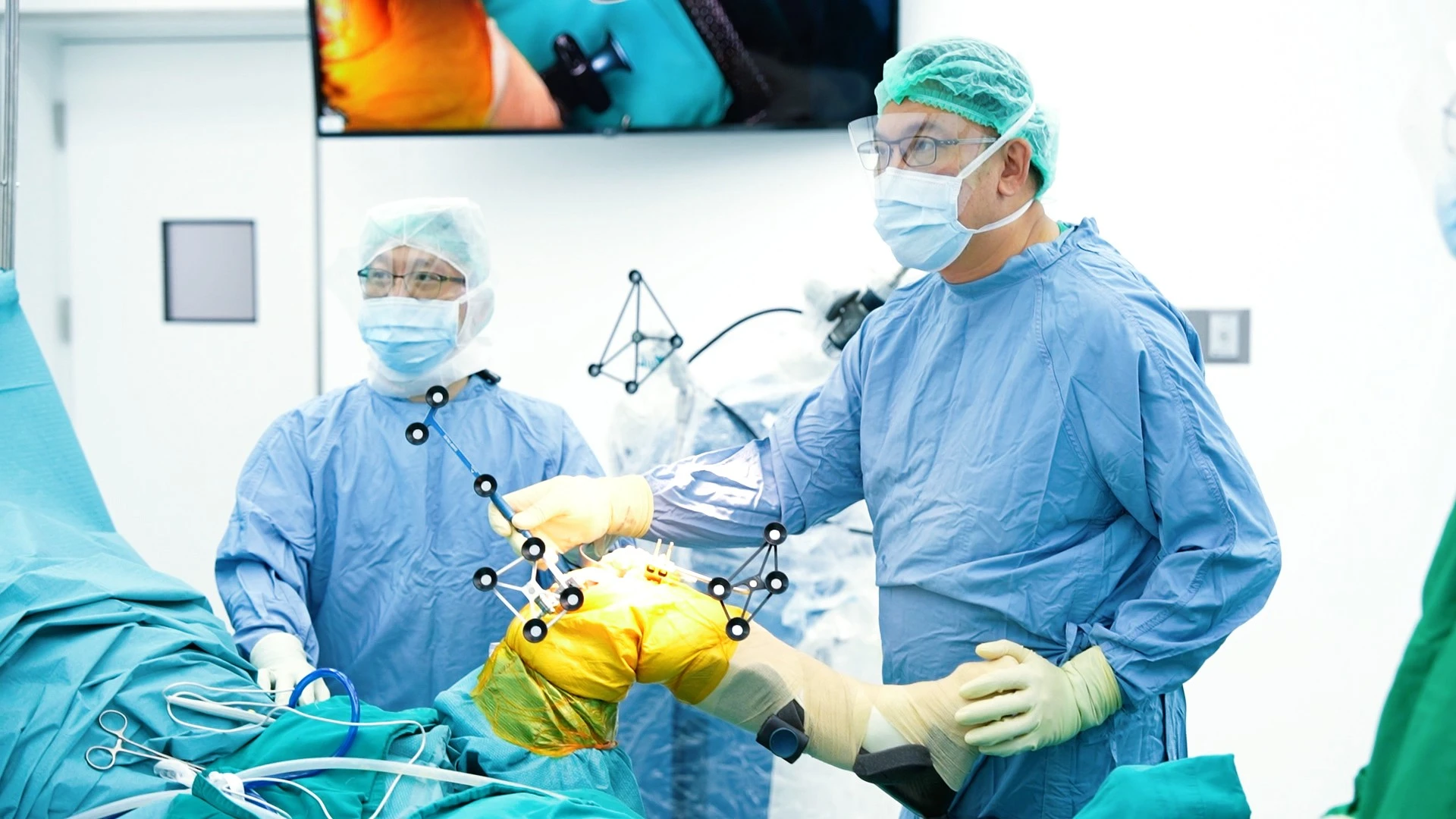
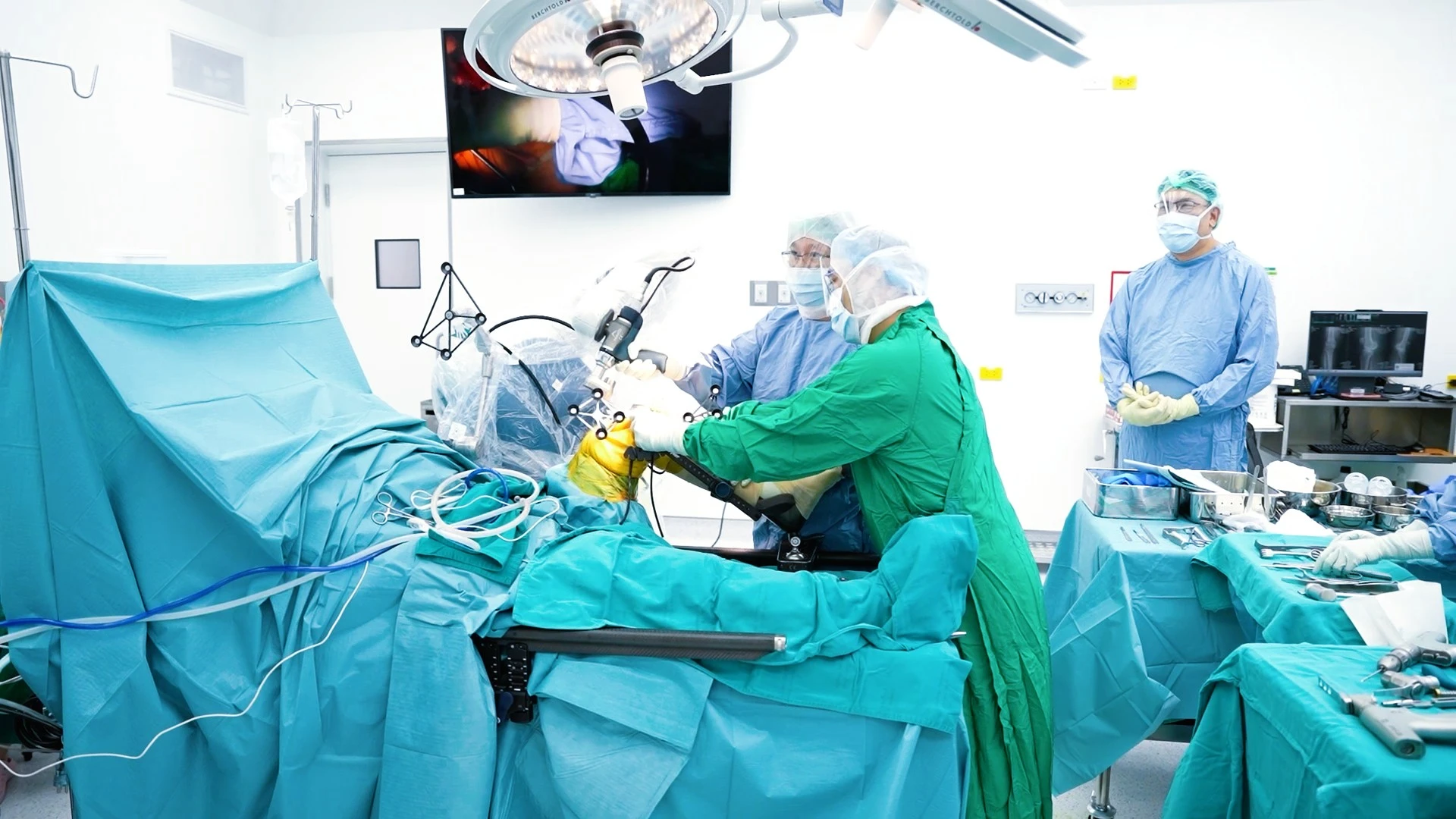
Thammasat University Hospital has introduced MAKO Robotic Arm-Assisted Joint Replacement technology to enhance the precision of prosthetic joint positioning, minimize injury to the surrounding tissues of the knee or hip, and support more effective postoperative recovery.
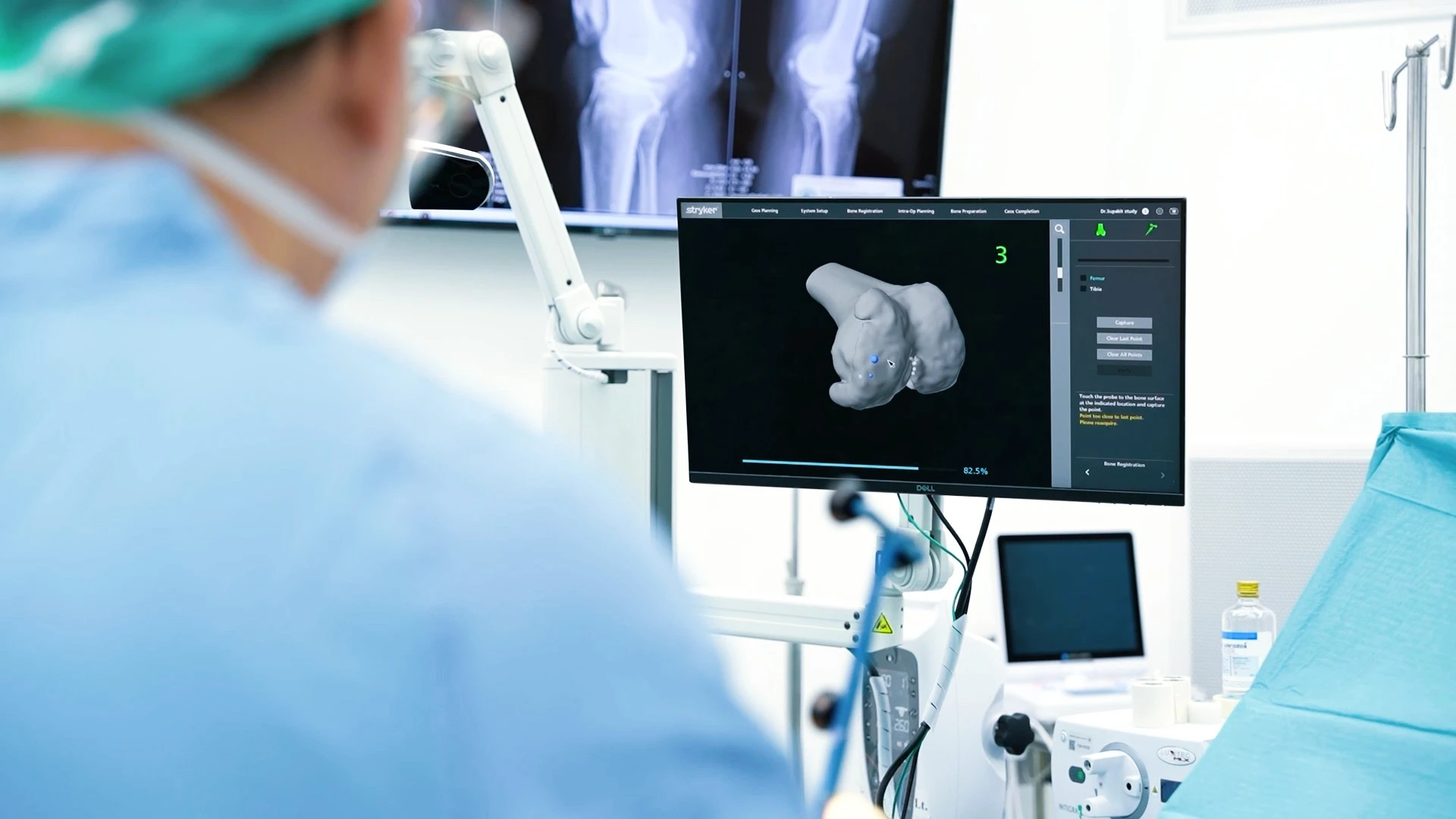
At the core of this technology is precision in implant positioning. This enhanced accuracy begins with a CT scan of the patient’s knee or hip before surgery. The CT images are then processed by a computer system, enabling the surgical team to develop a detailed preoperative plan, including the selection of the appropriate implant and determination of its optimal position based on each patient’s individual anatomy and joint alignment.
During surgery, the system uses the preoperative plan and registered anatomical data to match the planned position with the patient’s actual joint on the operating table. The surgeon then uses the robotic arm to assist with bone preparation and cutting according to the surgical plan, providing greater precision than conventional manual techniques. With manual bone cutting, there may be a deviation of approximately 1–2 millimeters, whereas robotic arm assistance can help reduce this deviation to approximately 0.5–1 millimeter. This enables more precise and consistent bone preparation and implant positioning.
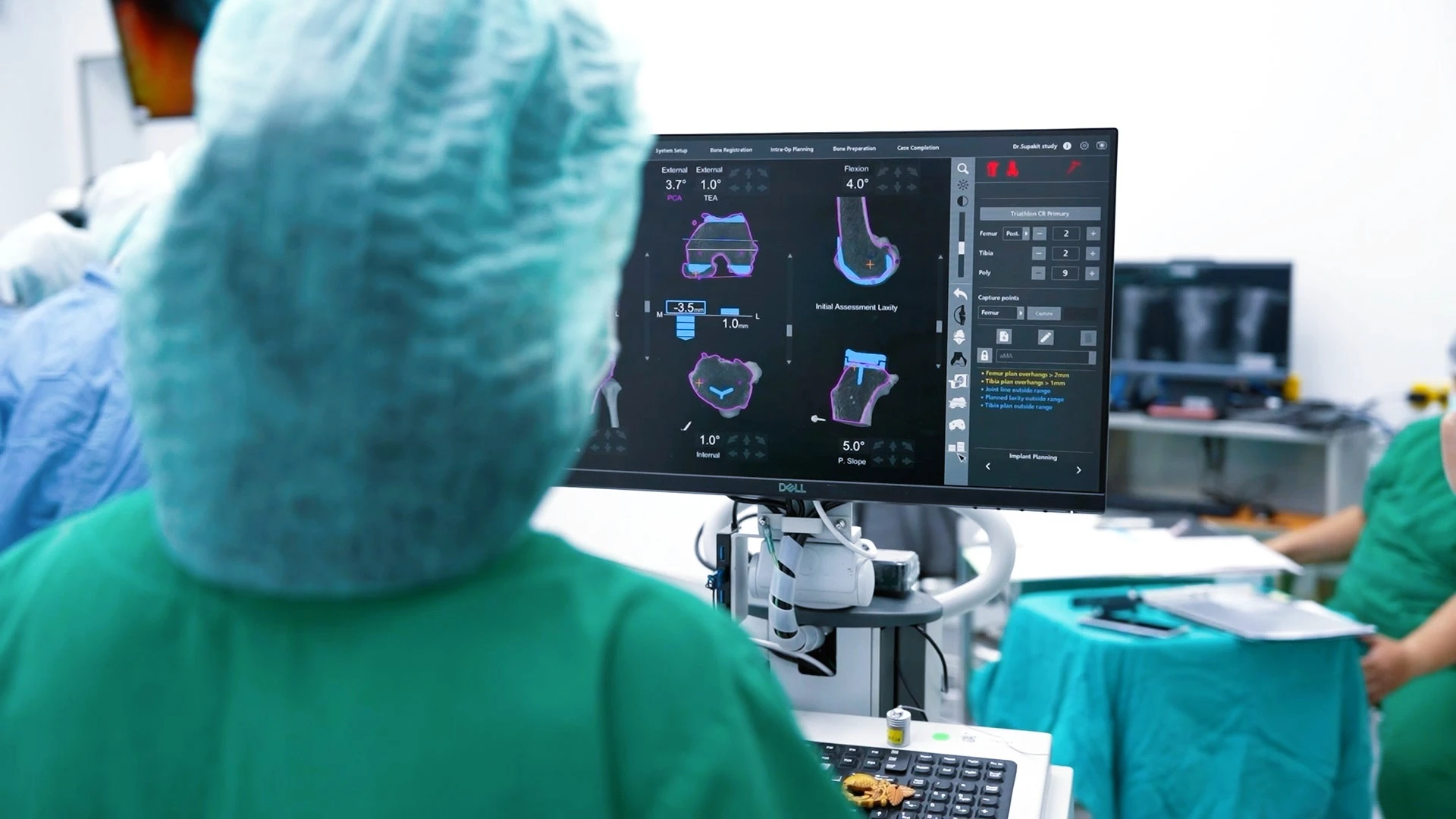
In addition to positioning accuracy, robotic arm technology enables the surgical team to assess and optimize joint balancing. The system provides real-time intraoperative data, allowing surgeons to evaluate the tension of the ligaments on both the inner and outer sides of the joint and determine whether appropriate balance has been achieved.
When the joint is properly balanced, it can provide greater stability and more natural movement. In knee replacement surgery performed with robotic arm assistance, optimal joint balancing may also contribute to reduced postoperative pain, improved recovery and rehabilitation, better joint function, and potentially greater long-term durability of the knee replacement.
Robotic Arm-Assisted Joint Replacement therefore represents another advancement in knee and hip replacement surgery, combining the precision of CT-based preoperative planning with real-time intraoperative data to support surgeons in delivering precise and confident treatment, with the goal of improving patients’ long-term quality of life.